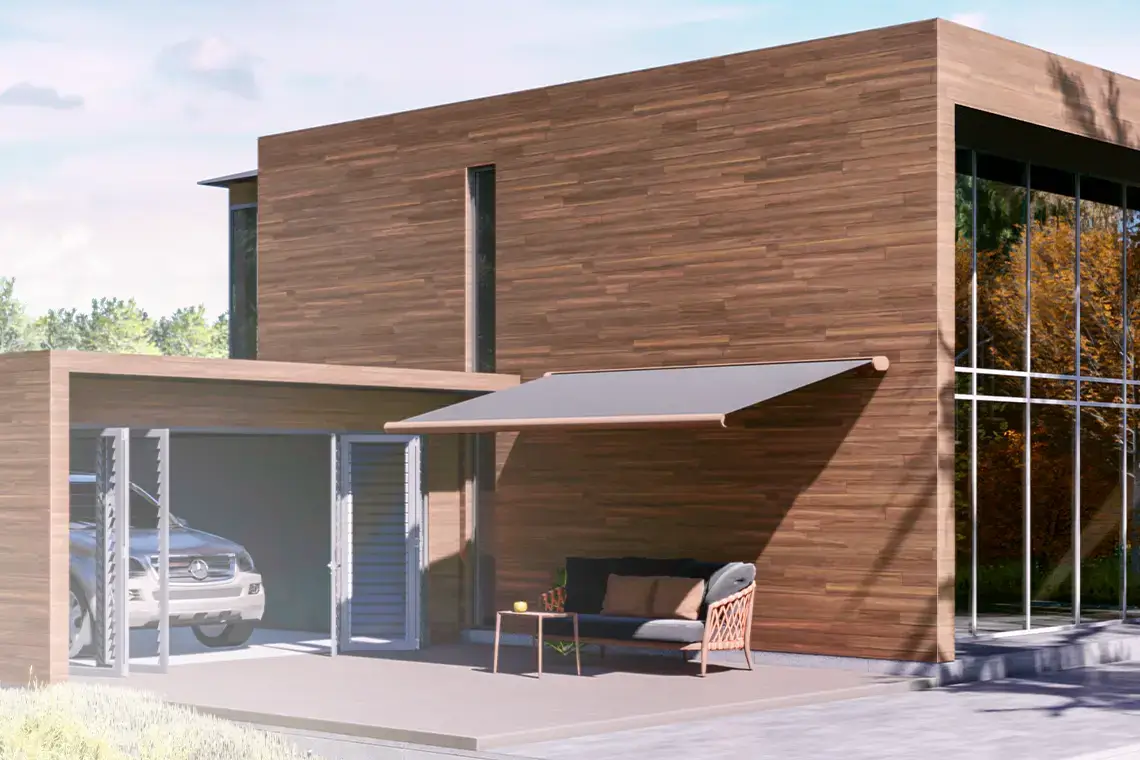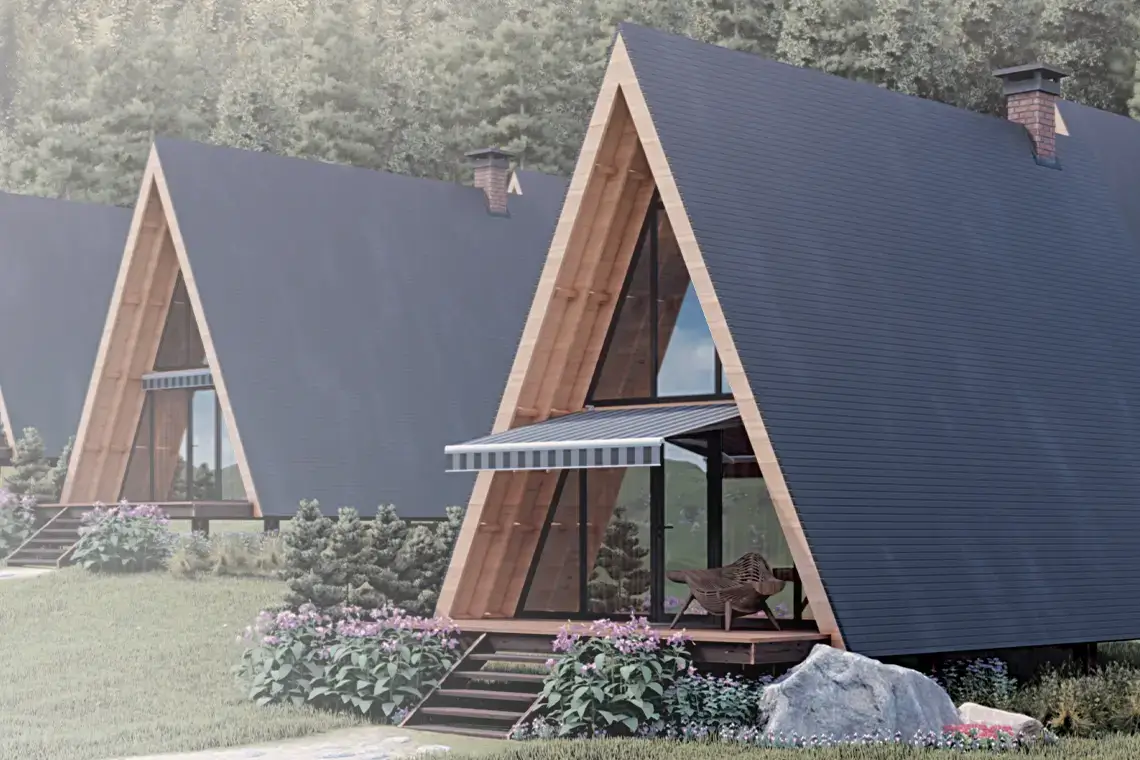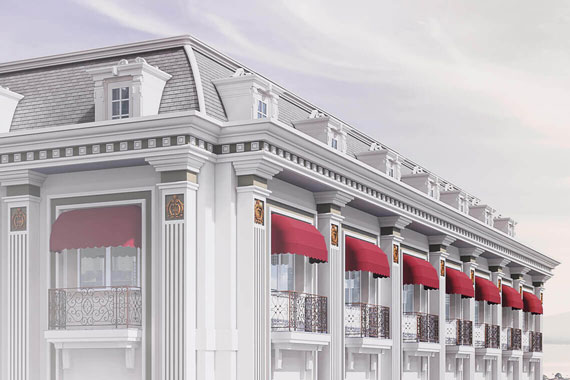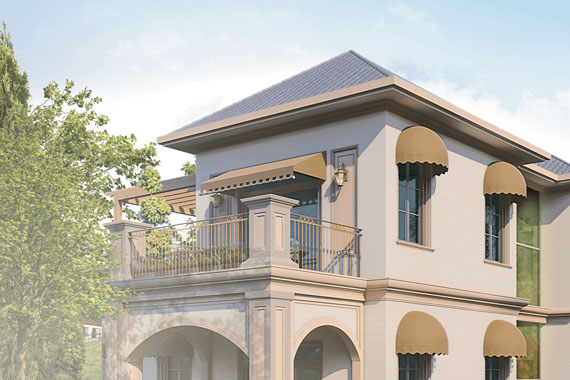



As the weather warms up, our desire to move our living spaces outdoors naturally increases. Balconies, terraces, and gardens become the ideal spots to shake off the fatigue of the day. However, to protect these areas from the scorching sun or unexpected rain and make them usable across all four seasons, awning or pergola systems are often needed. But do you know the legal procedures before taking this step to improve your quality of life? Especially for those living in apartment buildings or housing estates, the biggest question mark is this: Is it mandatory to get permission to install an awning/pergola in an apartment or estate?
If you live in a detached house, the decision is entirely yours. However, if you are in a multi-story building or a large estate, certain legal frameworks and neighborhood laws come into play. Installing a sunshade on your balcony or an aesthetic pergola in your garden might seem like a simple process from the outside, but if it is not legally grounded, it can cause serious problems with your neighbors or the municipality. In this detailed guide, we will cover the awning permission processes in apartments, the relevant articles of the Condominium Law (KMK), and license requirements in full detail.
The Legal Dimension of Installing an Awning/Pergola on a Balcony or Garden
Any changes that affect the exterior appearance of the building you live in or touch the common areas are secured by specific laws. Although balconies may appear to belong to your independent unit on the title deed, they are subject to certain restrictions because they are elements that make up the exterior facade of the building. Gardens, depending on their status, can be either private use areas or common areas.
Awning and Pergola Applications According to the Condominium Law
The most fundamental law regulating apartment and estate life in Turkey is the Condominium Law No. 634. This law clearly defines the rights and responsibilities of property owners. Article 19 of the law is quite clear: “Property owners are obliged to maintain the main building and protect its architectural state, beauty, and structural integrity.” According to the same article, one of the property owners cannot have construction, repair, facilities, or apply a different color of exterior paint/whitewash made in the common areas of the main building without the written consent of four-fifths (4/5) of all property owners.
In light of this article, the condominium law directly concerns awning and pergola applications. A fixed awning or pergola system you install on your balcony or terrace is considered an element that changes the architectural integrity and exterior appearance of the building. Therefore, randomly building a structure completely independent of the general color and design of the apartment is against the law.
Differences Between Common Areas and Personal Use Areas
The most important point that those who want to build a pergola within an estate should pay attention to is the title deed status of the area where the pergola will be installed.
- Independent Unit (Personal Area): Your balcony is a part of your independent unit. However, since it reflects on the exterior facade, it is still subject to aesthetic rules.
- Common Areas: You might live on the ground floor and have a garden you use in front of your house. If this garden is not “allocated to the ground floor owner” in the management plan of the apartment or estate, it is considered the common property of all flat owners. It is legally not possible to build a pergola or fixed awning on your own in a garden that is common property. You must get the approval of all property owners.
Do You Need to Get Permission from the Apartment or Estate Management?
Short answer: Yes, in most cases. However, the type of system and the apartment’s management plan (estate bylaws) play a decisive role here. Many luxury estates or well-organized apartments have previously tied interventions to the exterior facade to rules in their management plans.
Awning Applications Changing the Exterior Appearance
Buildings have an architectural aesthetic. One neighbor using a red awning, another green, and someone else blue will cause the building to display a chaotic and ugly appearance from the outside. To prevent this visual clutter, the apartment management can bring certain standards regarding awning permissions. For example, the management might take a decision at the general assembly stating, “Awnings to be made on balconies will be cream-colored and cassette models.” In this case, rather than getting permission, you are obliged to comply with this joint decision and format.
If there is no such pre-decision, whether the application you will make permanently disrupts the exterior facade is evaluated. Completely fixed systems welded to the building with concrete or iron profiles, which are difficult to dismantle, always require serious permission.
Neighbors’ Consent: What is the 4/5 Majority Rule?
If there is no pre-determined standard in the management plan and you want to install a fixed system on your balcony, terrace, or a garden that is not open to common use but affects the exterior facade, you must obtain the written approval of 4/5 of the property owners per the Condominium Law. The point to note here is: This ratio is not 4/5 of the attendees, but 4/5 of all property owners. So, in a 10-flat apartment, at least 8 flats must say “yes.” Permanent interventions made without this approval can result in a “reinstatement” (eski hale getirme) decision if any neighbor appeals to the court (Civil Court of Peace), and you may be forced to dismantle the system you had built.
Is a Municipal License Required for an Awning and Pergola?
You agreed with the property owners and got permission from your neighbors; but what about the municipality? The question of whether a pergola requires a license is answered differently depending on the structural features of the system. The Zoning Law and the Planned Areas Zoning Regulation clearly state which structures are subject to licensing and which can be built without one.
Portable Awnings and Retractable Pergola Systems That Do Not Require a License
Municipalities look at whether the structure creates a “fixed enclosed area”. According to the zoning regulation; retractable pergola systems and portable awnings (articulated, cassette, window awnings, etc.) whose load-bearing systems are made of lightweight materials (aluminum, etc.), which are not completely enclosed with glass or walls, and which are intended only for protection from sun and rain, do not require a license.
Even if the system is motorized, if its upper part consists of foldable or retractable fabric/aluminum panels, it takes it out of the “structure” status and puts it into the “shading element” status. Therefore, you do not need to go to the municipality and get a construction permit for motorized rail awnings, bioclimatic pergolas, or classic balcony awnings. This is a massive advantage for those who want to expand their living spaces.
License Process in Fixed and Enclosed Systems (Zoning Law)
If you completely enclose the pergola or awning system you are going to build with concrete, brick, or fixed profiles, and cover the top with a non-opening fixed roof (tiles, shingles, fixed sandwich panels, etc.), this means an “increase in enclosed area (floor area ratio)”.
Completely incorporating the balcony into the room or building a fixed winter garden in the yard is subject to a license according to the Zoning Law. A renovation license must be obtained from the municipality, and the project must be approved. Fixed enclosed areas built without permission face heavy fines and demolition decisions when detected by municipal police (zabıta). Therefore, to avoid legal problems, choosing “retractable” modern systems that do not require a license is always the most logical path.
Legal, Stylish, and Practical Solutions with Tenteks
Don’t let all these legal processes intimidate you! Tenteks pergola systems bring you the most flexible, stylish, and license-free shading solutions permitted by legal regulations.
If you want to enjoy your balcony or terrace without dealing with bureaucracy, Tenteks offers:
- Motorized and remote-controlled retractable rail pergolas,
- Aesthetic marvel bioclimatic pergola systems providing climate control,
- Cassette and articulated awnings with quiet motor technology that won’t disturb your neighbors!
As Tenteks, while designing our projects, we consider both your comfort and the aesthetic of your apartment/estate. Thanks to our wide color options that will 100% match the exterior of your building and our lightweight but durable aluminum constructions, we expand your living spaces without entering the “fixed structure” status and without needing a municipal license. If you are wondering “Is a balcony awning legal?” or “What kind of system can I have installed in my estate?”, Tenteks’ expert survey team is ready to examine your area and offer you the most legal and aesthetic solution.
Frequently Asked Questions (FAQ)
We have summarized the most common questions from our customers and users regarding balcony or garden arrangements for you:
Does it require permission to install an articulated (folding arm) awning on a balcony? Articulated awnings are completely portable, retractable, and lightweight shading elements that do not put a permanent load on the building’s load-bearing system. Since they do not have the characteristics of a fixed structure (construction), they generally do not require a municipal license. However, since it directly affects the exterior of your apartment, if there is a decision in the apartment management plan such as “awnings cannot be installed on balconies” or “only a specific color awning can be installed,” you must comply with this decision or get approval from the apartment management (4/5 majority). When color coordination is considered for a standard application, problems are not usually experienced.
Is it legal to build a pergola in a ground floor estate garden? The answer to this question depends on the status of the garden on the title deed. If the garden in front of the ground floor is allocated only for the private use of that flat (yours) in the title deed and management plan, it is legal to install retractable pergola systems (like Tenteks pergola models) that do not require a license. However, if the garden is listed as a “common area,” even if it is only in your use as the ground floor resident, it is not legal for you to build a pergola there without the approval (4/5) of the other property owners.
In case of a complaint, will an awning or pergola built without permission be dismantled? If the installed system is a structure subject to licensing—enclosed with bricks or fixed glass, and its roof is made of concrete or fixed material—and it was built without permission, a demolition decision can be given by the municipality. On the other hand, even if the system is portable, applications made in a way that disrupts the exterior facade without taking the 4/5 majority decision of the apartment management can be taken to court by neighbors. Based on KMK articles, the court can decide to “reinstate” (dismantle) the structure. To avoid experiencing such negative situations, establishing transparent communication with property owners and preferring flexible retractable systems like Tenteks saves the day.