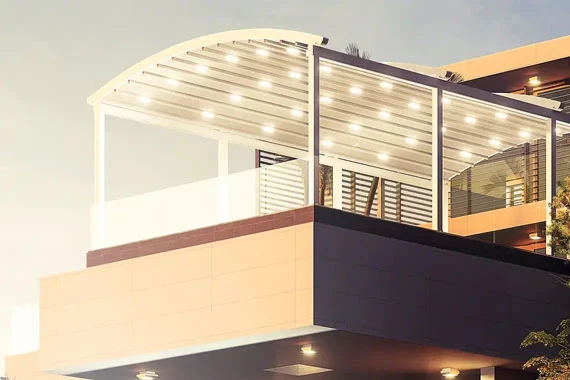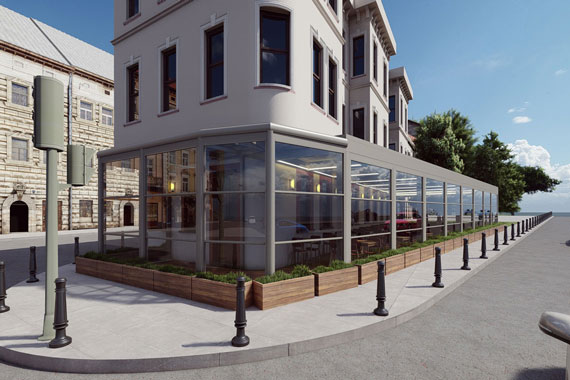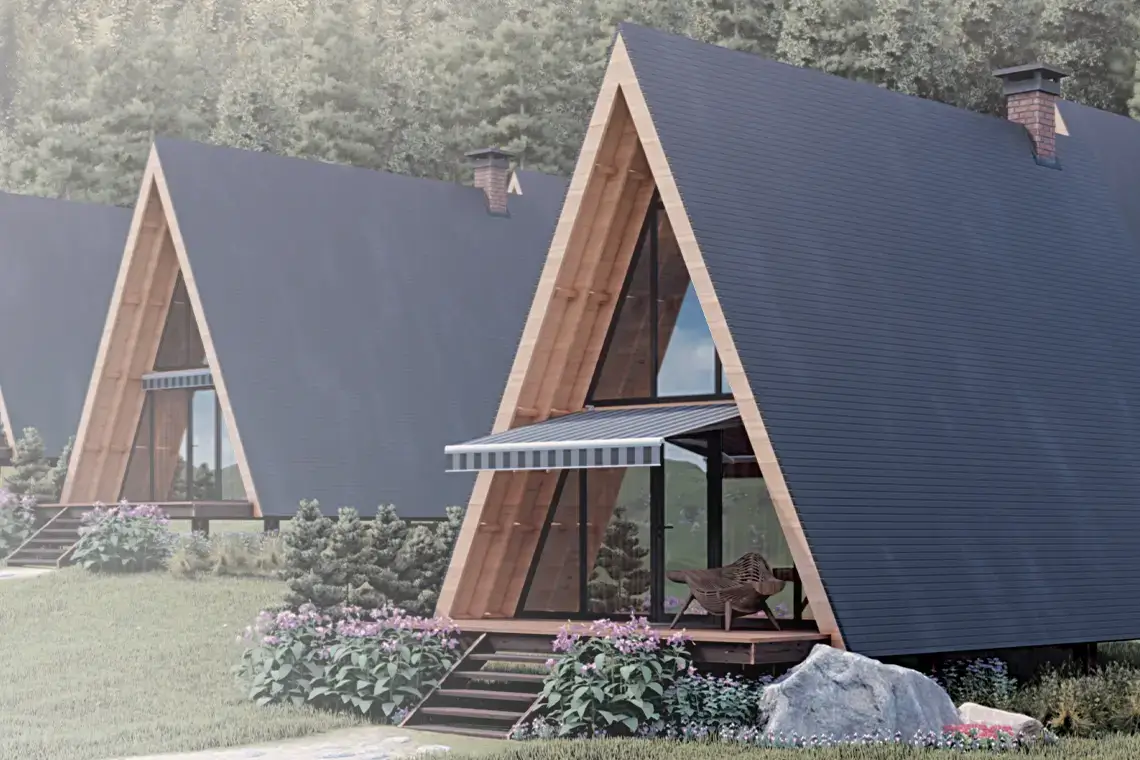


Glass systems used in commercial spaces are not merely enclosure solutions; they are also elements that directly impact customer experience, brand perception, and operational efficiency. Choosing the right glass system for businesses such as cafés, restaurants, and hotels is a critical decision that determines both short-term costs and long-term operational performance. At this point, guillotine glass and sliding glass systems-two of the most commonly compared options-offer solutions tailored to different needs.
While guillotine glass systems provide a modern and automated experience with their vertical movement mechanism, sliding glass systems offer a more traditional and manual experience by moving horizontally. However, the choice should not be made solely based on the mechanism difference. Many parameters such as thermal insulation, usage intensity, type of space, aesthetic expectations, and budget play a role in this decision. In this guide, you will find a detailed technical and operational comparison of both systems for commercial spaces.
What Are Guillotine Glass Systems and How Do They Work?
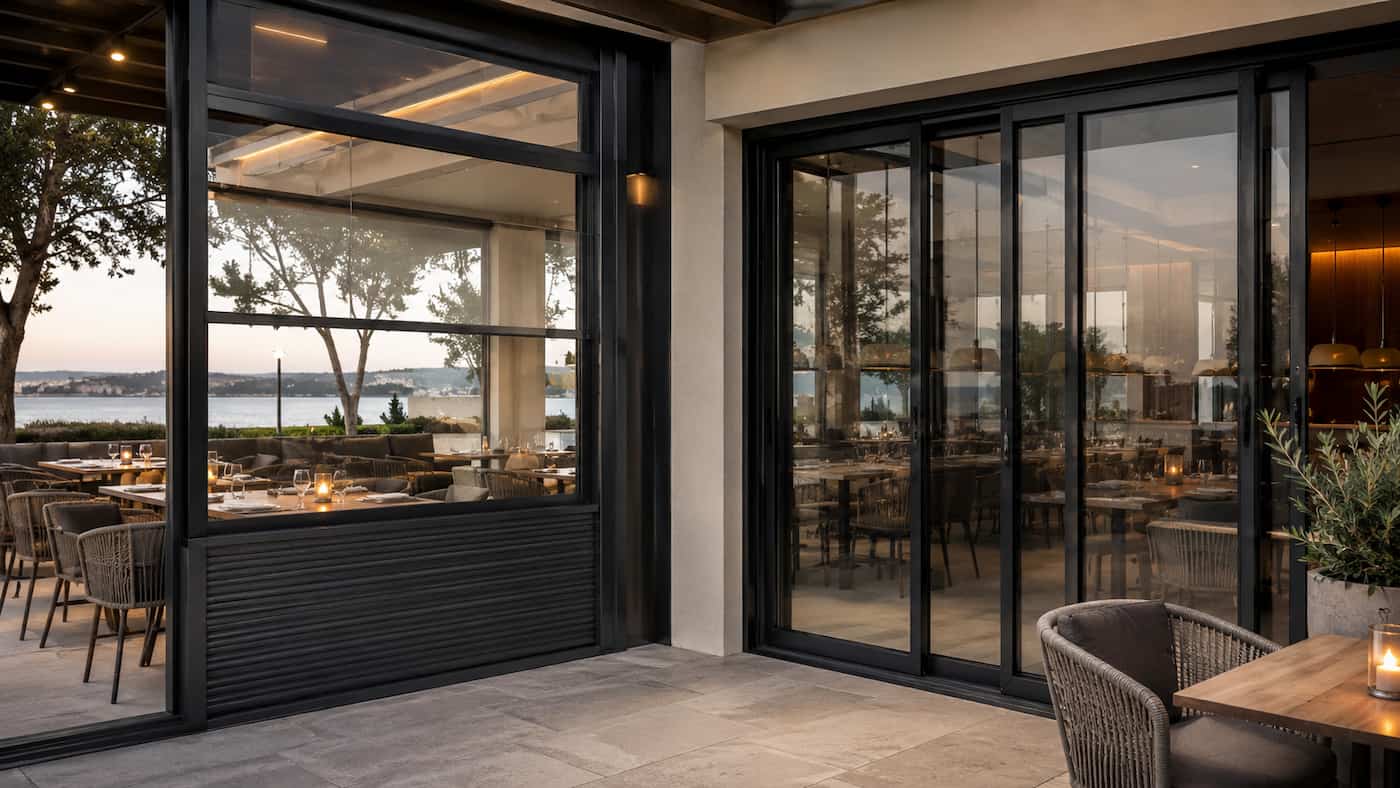
Guillotine glass systems are modern glass enclosure solutions in which glass panels move along a vertical axis and are typically powered by motorized mechanisms. In these systems, glass panels move up and down to open and close. Thanks to the automatic control mechanism, they offer a comfortable and fast user experience. The primary reason they are frequently preferred in commercial spaces is their ability to fully open or close the area.
These systems can generally be controlled via remote control, buttons, or smart systems, providing operational convenience for businesses. Especially in venues with high customer traffic, the need for quick opening and closing makes guillotine glass systems more advantageous. At the same time, they offer a premium appearance with their modern design language, strengthening brand perception.
Operating Principle of Automatic Guillotine Glass Systems
Automatic guillotine glass systems move glass panels vertically through an integrated motor and rail mechanism. The motor is typically concealed within the system, preserving the aesthetic appearance. Glass panels are lifted upward or lowered downward using a balanced system. Counterweights or chain mechanisms used during this process ensure stable operation.
One of the key advantages of these systems is the minimal need for user intervention. The entire system can be controlled with a single command, which saves significant time, especially in large areas. Additionally, in models equipped with safety sensors, the system automatically stops when an obstacle is detected, enhancing both user safety and system longevity.
Advantages of Guillotine Glass Systems in Commercial Use
Guillotine glass systems provide maximum openness in commercial spaces. When fully opened, there is almost no barrier between the interior and exterior environments. This significantly improves customer experience, especially in cafés and restaurants. Creating an open-air feeling is a critical factor in increasing customer satisfaction.
Moreover, being an automatic system reduces staff workload. In areas that require frequent opening and closing throughout the day, it provides much higher efficiency compared to manual systems. From an aesthetic perspective, it contributes to brand positioning by offering a modern and premium appearance-an essential advantage for high-end businesses.
What Are Sliding Glass Systems and Where Are They Used?
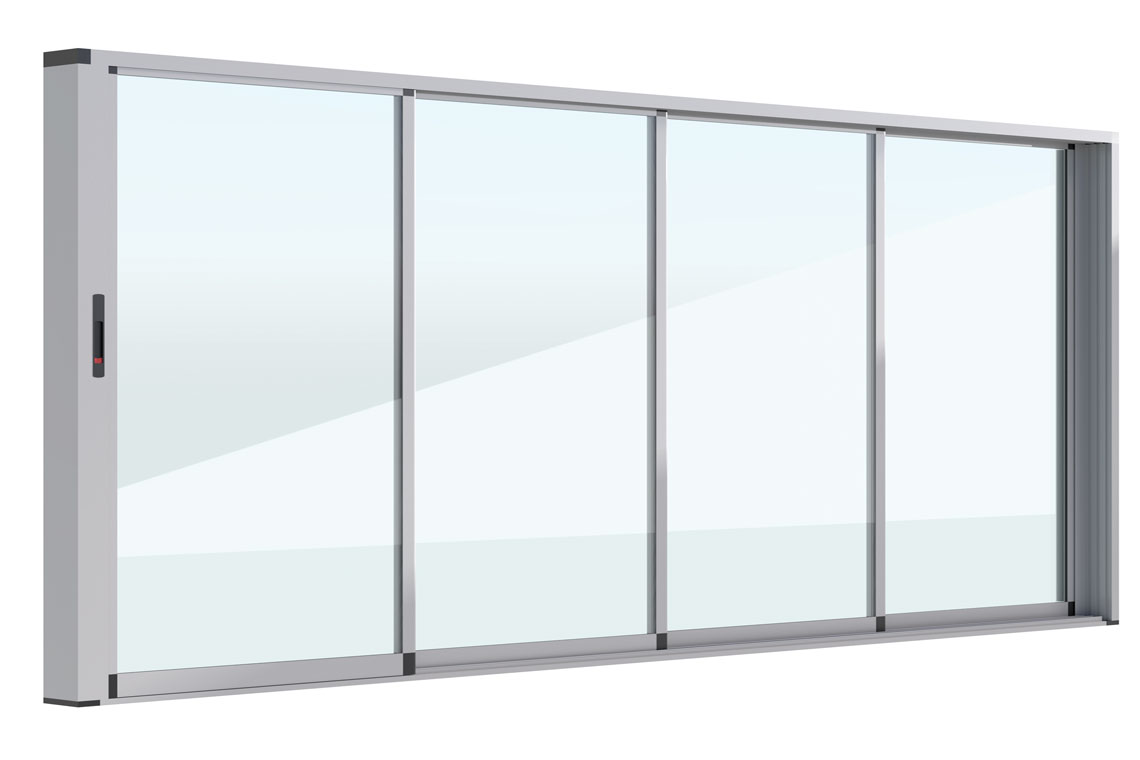
Sliding glass systems are classic enclosure solutions where glass panels move horizontally to open and close. In these systems, glass panels slide along rails and are generally operated manually. Their simpler mechanism provides advantages in both cost and maintenance, which is why they have a wide range of applications.
These systems are typically preferred for balconies, terraces, and lower-traffic commercial areas. Due to their ease of use and economic structure, they are ideal for small and medium-sized businesses. They can also be easily integrated into the architectural structure of a space and applied in various dimensions.
Mechanical Structure of Sliding Glass Systems
Sliding glass systems consist of panels that move along upper and lower rails. These panels slide left or right via roller mechanisms to open. Due to their simple mechanical structure, the risk of malfunction is low, and maintenance processes are generally easy. This helps minimize long-term operational costs.
These systems usually include locking mechanisms for secure use. Additionally, the parallel movement of glass panels allows controlled opening of the space. However, creating a fully open area is not always possible, which can be considered a disadvantage depending on the use case.
Benefits of Sliding Glass Systems for Commercial Spaces
Sliding glass systems stand out with their cost advantage. A simpler installation process and basic mechanical structure reduce total investment costs. This makes them an attractive option for budget-focused businesses. Their manual nature also eliminates dependency on electricity.
Furthermore, their durable structure ensures long-term use. With proper maintenance, they can operate smoothly for years. In small-scale cafés and restaurants, where partial opening is sufficient, sliding systems provide adequate performance. However, in high-traffic environments, they may be limited in terms of speed.
Key Differences Between Guillotine and Sliding Glass
The main difference between guillotine and sliding glass systems lies in their movement mechanism and user experience. Guillotine systems move vertically, while sliding systems move horizontally. This difference leads to varying outcomes in terms of ease of use, space efficiency, and aesthetics.
Another critical difference is the opening ratio. Guillotine systems allow full opening, whereas sliding systems overlap at a certain point and cannot provide complete openness. This is a crucial factor for businesses aiming to create an open-space experience. In terms of cost, guillotine systems require higher investment, while sliding systems offer a more economical solution.
Which Glass System Is More Advantageous for Commercial Spaces?
The right glass system depends on the intended use of the space and customer profile. Guillotine glass systems are more advantageous for businesses with high customer traffic and fast operational needs. Their automatic structure allows quick opening and closing, reducing staff workload and improving efficiency-especially in restaurants and cafés.
On the other hand, sliding glass systems may be sufficient for low-traffic, budget-focused businesses. Their lower installation cost and ease of maintenance make them more accessible. The physical structure of the space is also a determining factor. In narrow spaces, sliding systems may offer a more practical solution.
Glass System Selection for Cafés and Restaurants
Glass system selection directly affects customer experience in cafés and restaurants. For businesses aiming to create an open-air feeling and eliminate the boundary between indoor and outdoor spaces, guillotine glass systems are the better option. They allow the space to be fully opened, creating a spacious atmosphere.
However, in smaller or local businesses, sliding glass systems can also provide sufficient performance. In cases where full opening is not required, they offer a more economical solution. Therefore, both customer expectations and the concept of the space should be evaluated together.
Glass Systems for Hotels and Terrace Areas
Glass systems play a critical role in aesthetics and comfort in hotel and terrace areas. Since a premium experience is often expected in these spaces, guillotine glass systems are more frequently preferred. Their automatic operation and modern appearance align well with hotel concepts.
However, in some terrace areas, sliding glass systems may also be preferred. For wind protection or partial enclosure, sliding systems can be sufficient. Still, in general, guillotine systems stand out as the stronger option in high-end venues.
Comparison in Terms of Thermal Insulation and Energy Efficiency
Thermal insulation is a critical factor for both comfort and cost in commercial spaces. Guillotine glass systems generally offer more advanced insulation solutions. With double glazing and sealing systems, they maintain indoor temperature more effectively, reducing energy consumption and operational costs.
In sliding glass systems, insulation performance depends on the materials used. Standard models may have lower sealing performance, leading to heat loss, especially in winter. However, with high-quality materials and proper installation, this difference can be minimized. Still, overall, guillotine systems are more advantageous.
Evaluation in Terms of Ease of Use and Space Management
In terms of ease of use, guillotine glass systems clearly stand out. Their automatic control mechanism allows full system management with a single command, providing a significant advantage during peak hours. The lack of need for manual intervention speeds up operations.
In sliding systems, manual operation is required. While this may not be an issue in small spaces, it can cause time loss in larger areas. Continuous use may also require physical effort, reducing operational efficiency. Therefore, in high-usage scenarios, guillotine systems are more advantageous.
Cost, Installation, and Maintenance Comparison
From a cost perspective, sliding glass systems offer a more economical solution. Their simpler installation and basic mechanical structure reduce overall costs, making them attractive for businesses with limited initial investment.
Guillotine glass systems are more expensive due to motorization, automation, and more complex installation processes. However, their long-term operational advantages and energy savings can offset this cost. In terms of maintenance, sliding systems generally require less technical intervention.
Glass Systems in Terms of Aesthetics and Brand Experience
From an aesthetic standpoint, guillotine glass systems provide a more modern and premium appearance. They enhance the overall design of the space and strengthen brand perception, which is especially important for high-end businesses.
Sliding glass systems offer a simpler and more traditional look. While this may be sufficient for some spaces, it may fall short for brands aiming to create a premium image. Therefore, glass system selection should be considered a strategic decision in brand positioning.
Key Considerations When Choosing the Right Glass System
To choose the right glass system, the needs of the space must first be clearly analyzed. Usage intensity, customer profile, budget, and physical characteristics of the space play a decisive role. Long-term costs should also be taken into account.
In addition, the technical features and service support of the selected system are important. High-quality materials and professional installation directly impact performance. Therefore, the selection process should focus not only on price but on total value.