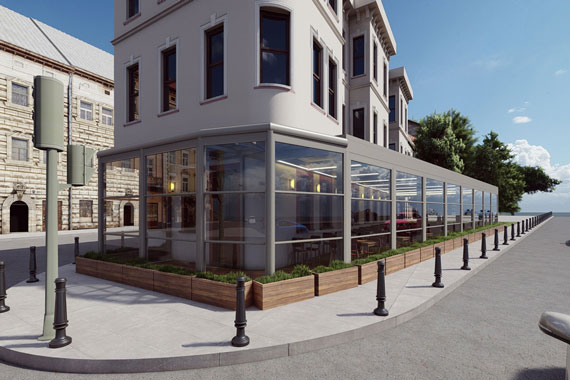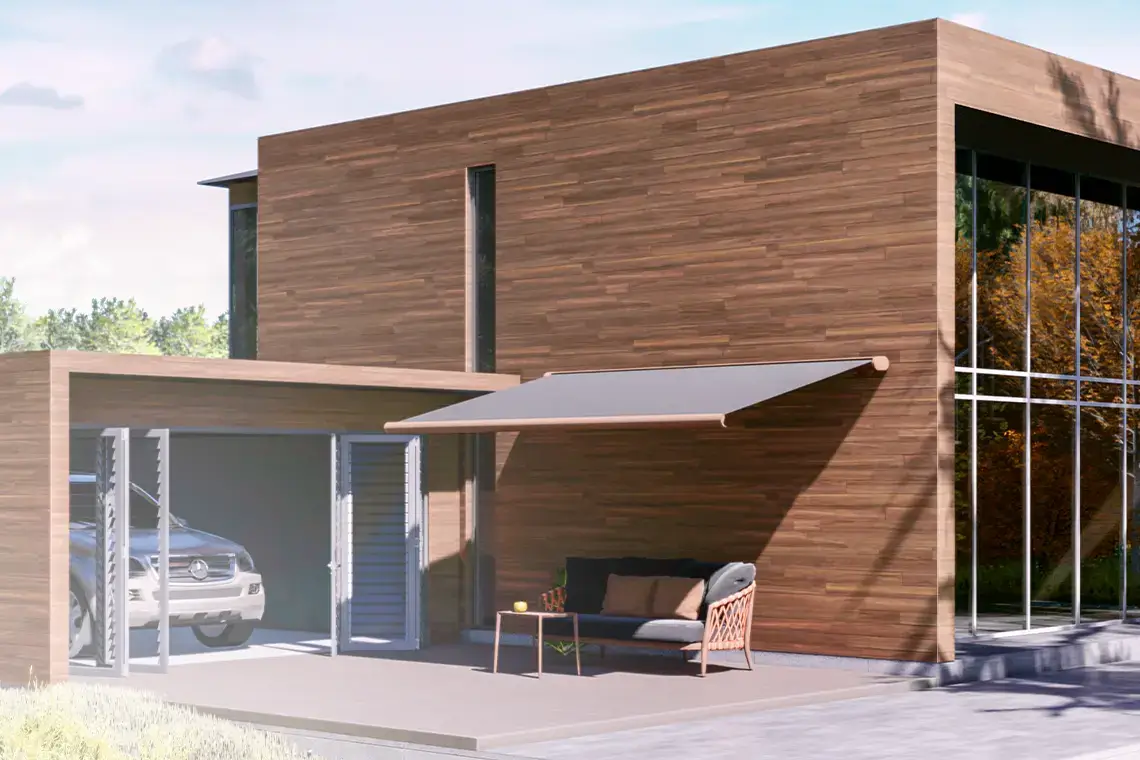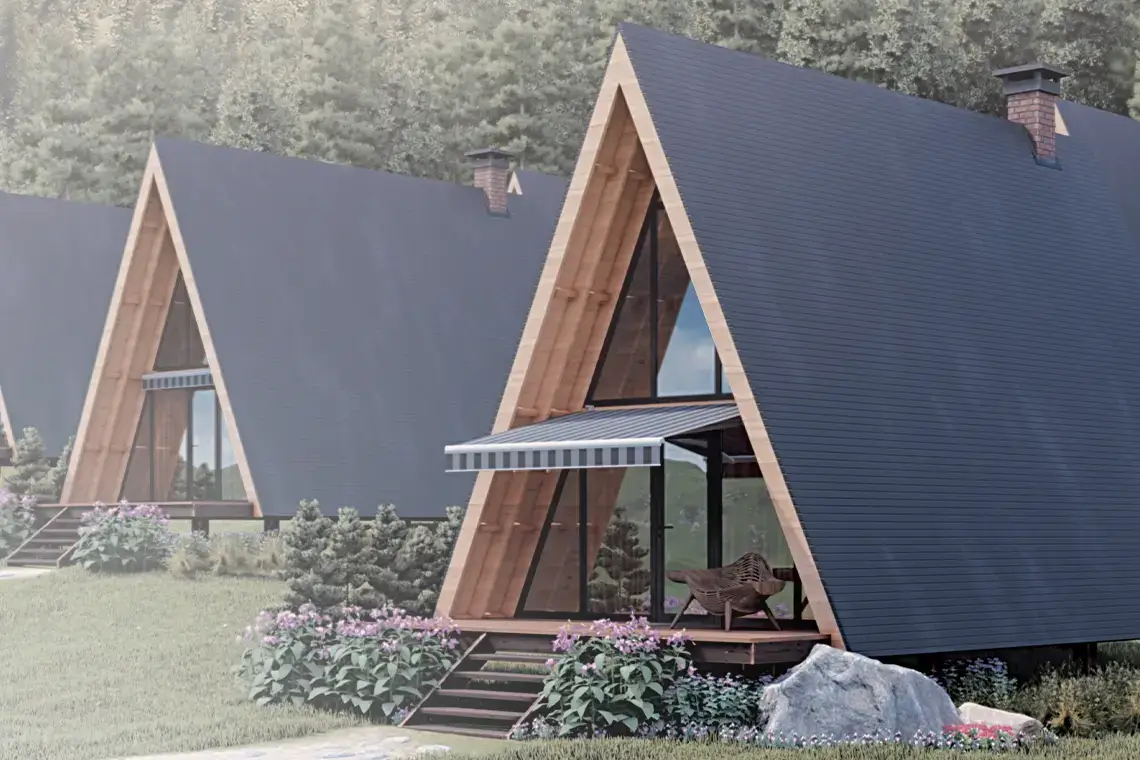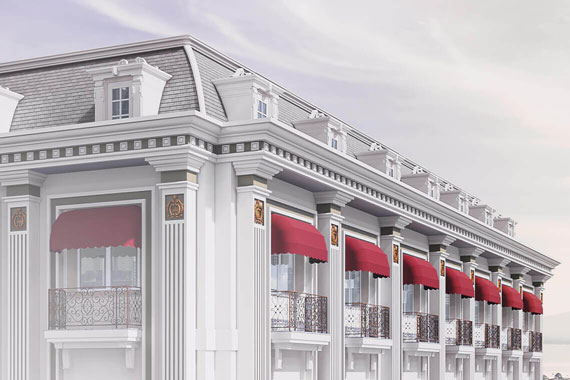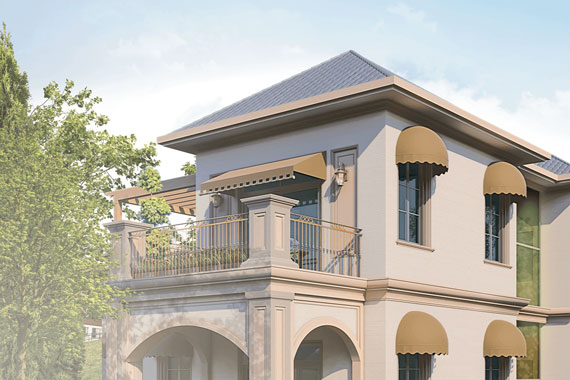
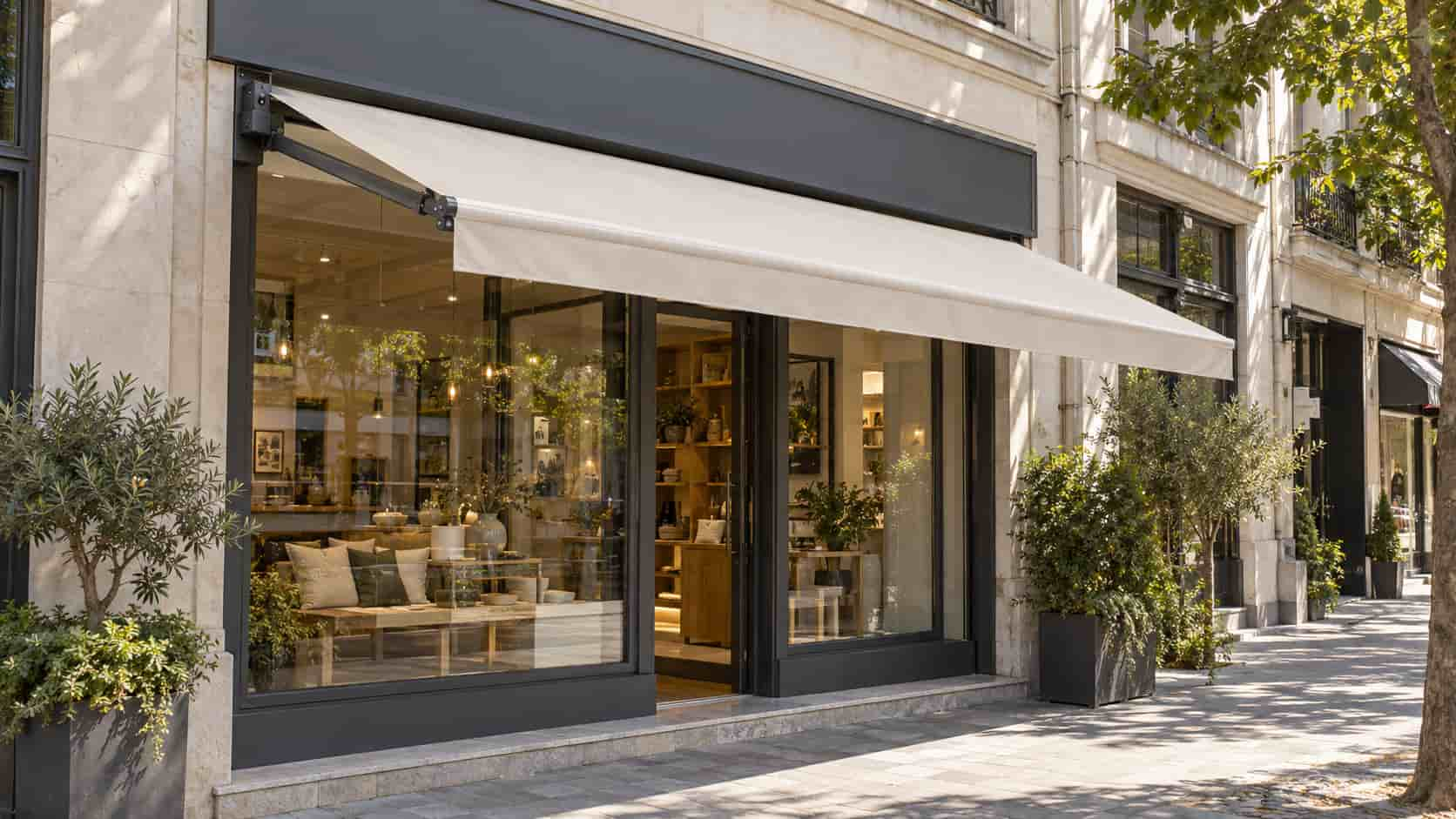

An awning used on a commercial facade is not merely a shading element that blocks sunlight. It also plays an important role in how visible the business is from the street, how well the entrance area is protected, and how effectively outdoor spaces can be used. For this reason, choosing a shopfront awning should involve more than selecting a size or color. The intended use, facade structure, and environmental conditions should all be considered together.
The right system should provide sufficient shade while preserving storefront visibility, supporting the visual identity of the business, and offering a structure suitable for local wind conditions. When projection depth, fabric type, operating mechanism, and mounting points are planned as a complete system, the result can be both functional and suitable for long-term use.
What Should You Consider When Choosing a Shopfront Awning?
The first factors to evaluate are the width of the facade, the direction of sunlight, the position of the entrance, and the area that needs to be covered. On a facade exposed to strong sunlight throughout the day, shading may be the main priority. On narrower streets with heavy pedestrian traffic, however, how far the awning projects outward may become more important. Defining the intended use in advance helps prevent unnecessary sizing or mechanism choices.
The awning should also complement the architectural appearance of the business. The fabric color, frame design, and opening style should not completely hide the storefront; instead, they should contribute to a cleaner and more organized facade. When selecting a commercial awning, maintenance requirements, operating frequency, motorization options, and the load-bearing capacity of the mounting surface should also be considered for long-term performance.
How Should a Shopfront Awning Be Chosen Based on Shading Needs?
Shading performance does not depend solely on the width of the awning. The angle of sunlight, changes in sun direction during the day, and the pitch of the system directly affect the actual shaded area. Especially on facades that receive strong afternoon sun, insufficient projection can result in poor shading even when a relatively large awning is installed.
For this reason, shopfront shading should be planned by considering both facade width and the available projection distance. Businesses with outdoor seating may need to protect the entire seating area, while retail stores that only want to reduce direct sunlight on the display window may require a smaller projection. Correct sizing helps prevent the awning from being either oversized or insufficient.
How Should Awning Size Be Determined According to the Shop Facade?
The size should be calculated based on the usable mounting width, the positions of doors and windows, and the required projection depth. Installing a system wider than the facade does not automatically create better shading. The correct pitch and extension should be determined by taking sunlight movement at different times of the day into account.
How Does a Shop Awning Affect Brand Visibility?
An awning can become one of the most visible elements of a commercial facade, especially from a distance. On streets with heavy pedestrian traffic, fabric color, logo placement, and business name positioning can all support brand recognition. However, an overly busy design may make the facade look cluttered and reduce the readability of the business name.
For this reason, a shop awning should be designed by balancing corporate colors with the architectural character of the location. The fabric color should not overpower the storefront, and any text should remain visible when the awning is both open and closed whenever possible. The front valance is often one of the most suitable areas for displaying a logo or business name.
How Should the Logo and Business Name Be Positioned on the Awning?
The logo and business name should be placed in a simple layout that remains readable from a distance. Very small lettering, low color contrast, or too much messaging on one surface can reduce visibility. Corporate colors can be preserved while still creating enough contrast between the text and the awning fabric for a clearer facade presentation.
How Should a Wind-Resistant Shop Awning Be Chosen?
Wind load is one of the main technical factors to consider, particularly for awnings with a large projection. As the surface area increases, the force applied by wind can also become greater. For this reason, fabric quality alone is not enough. Support arms, fixing points, and the strength of the mounting surface must also be suitable for the system.
When selecting a wind-resistant awning, the wind characteristics of the area should be taken into account. Open street fronts, coastal locations, and areas near tall buildings may be more exposed to sudden wind movements. In such environments, choosing an appropriate mechanism is important, but users should also close the awning during strong weather conditions and follow the operating limits specified by the manufacturer.
Which Awning Systems Are More Suitable for Windy Areas?
In windy locations, systems with robust support profiles, strong fixing elements, and controlled opening mechanisms should be considered. Cassette or motorized systems can make it easier to retract the awning when it is not in use. Automation supported by a wind sensor can also help close the system automatically when predefined wind conditions are detected.
How Should Shopfront Awning Fabric and Frame Materials Be Chosen?
Because awning fabric is continuously exposed to outdoor conditions, its resistance to sunlight, moisture, and color fading should be evaluated carefully. Appearance alone is not enough. Depending on the application, water repellency, UV resistance, and ease of cleaning may also be important. For frequently used commercial areas, fabrics that require less maintenance can offer a practical advantage.
For the frame, profile strength, the quality of connection components, and the overall mounting system are critical. Materials such as aluminum may offer lower maintenance requirements for outdoor use, while proper installation of connection points directly influences overall durability. In storefront awning applications, the fabric and supporting structure should be assessed as one integrated system rather than as separate components.
How Should You Choose Between a Manual and Motorized Shop Awning?
Manual awning systems can be sufficient for small and medium-sized applications because they have a relatively simple operating mechanism. They may be practical when the awning is opened and closed only a limited number of times during the day. However, on wider systems or in businesses where the awning is operated frequently, manual use can require more physical effort.
Motorized systems can provide greater convenience, particularly on wide commercial facades. Solutions controlled by remote control, wall switch, or automation system make it easier to adjust the awning quickly according to weather conditions. When choosing an awning for businesses, the decision between manual and motorized operation should be based not only on cost, but also on awning size, frequency of use, and daily operational needs.
How Can Shade, Visibility, and Durability Be Balanced in Shopfront Awning Selection?
In a well-planned awning system, shading, brand visibility, and structural durability should not be treated as separate priorities. A very large awning may create more shade, but it can also reduce storefront visibility or increase wind load. Likewise, a smaller system chosen mainly for visual reasons may not provide enough protection from direct sunlight.