
Creating a comfortable place to relax beside a pool starts with deciding where and how the shade structure will be used, before considering its appearance. Sun lounger placement, changing sun angles throughout the day, wind exposure and splashing water all influence the choice of system. The right solution provides shade when it is needed, keeps walkways clear and has features suited to the conditions where it will be installed.
When choosing a poolside awning, focusing only on fabric colour or the number of square metres to be covered is not enough. The supporting structure, covering material, opening mechanism and maintenance requirements should be assessed together. Similarly, when considering a pergola, the seating layout, installation surface and rainwater drainage should be addressed from the outset. This helps the system fit naturally into everyday life around the pool.
Should You Choose an Awning or a Pergola Beside the Pool?
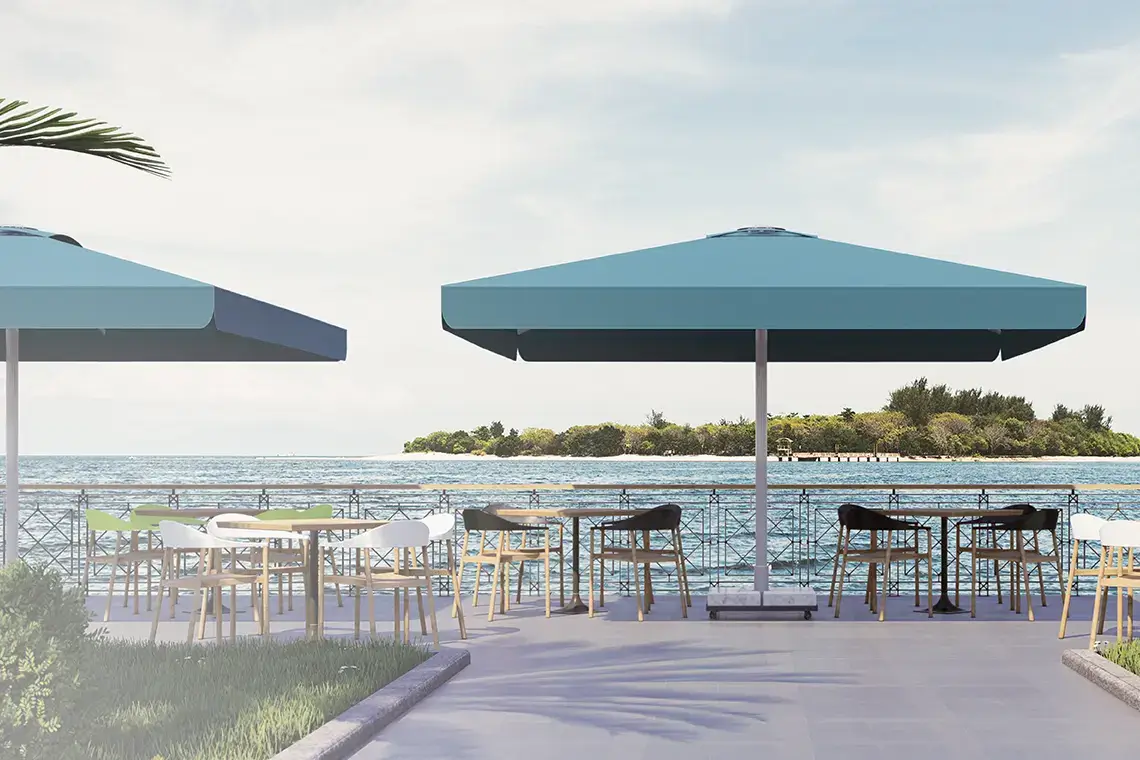
Folding arm or cassette awnings can be considered when shade is needed at certain times of day and the covering should retract when not in use. Pergola systems supported by posts are an option for creating a more clearly defined seating area. However, a pergola can also have a retractable fabric roof, so the decision should not be based on the product name alone. The comparison should focus on the supporting structure and intended use.
The pool’s proximity to the building, the availability of a suitable fixing surface and the space that can be allocated to support posts all affect the decision. A small group of sun loungers may have different requirements from a large dining area. First, establish how many people will use the shade, at what times and for which activities. Then assess the dimensions and technical suitability of the systems that meet those needs.
What Needs Does a Poolside Awning Meet?
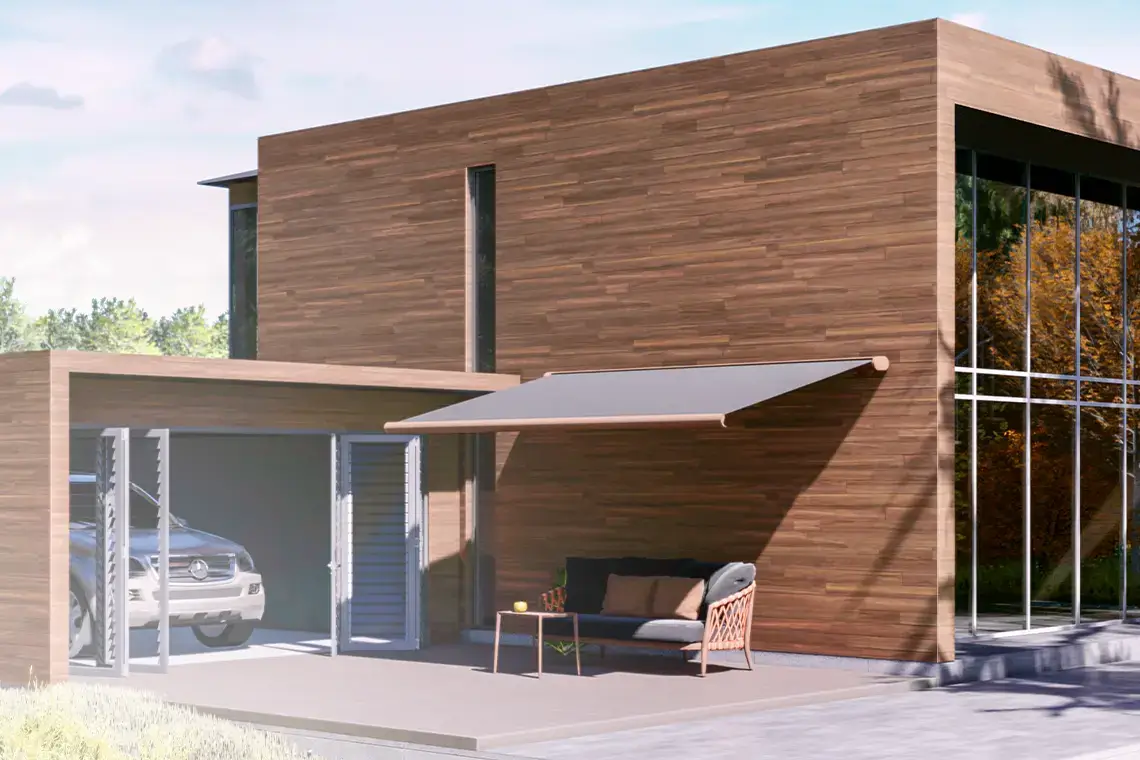
Retractable awnings can be a practical option for shading a group of sun loungers or a small seating area during the summer. Where a suitable supporting wall is available, folding arm models can provide a layout without front support posts. However, the projection, load-bearing capacity of the fixing surface and the product’s operating limits in windy conditions must be checked for the specific installation.
What Needs Does a Poolside Pergola Meet?
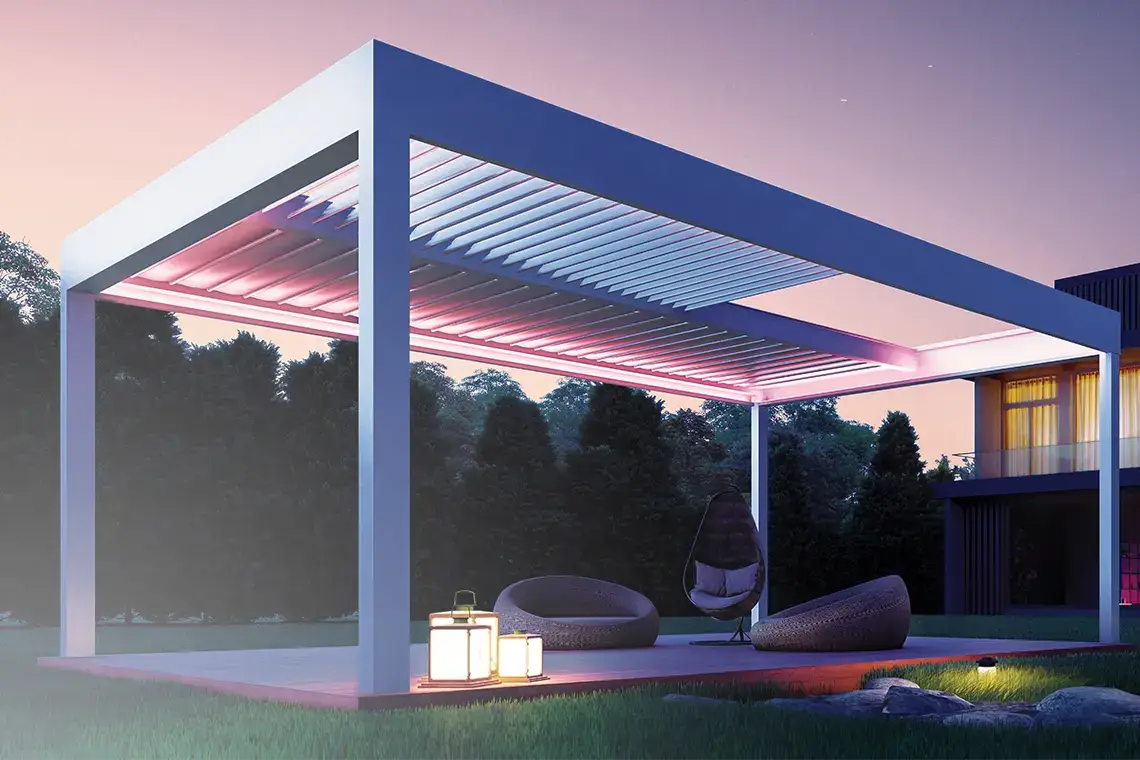
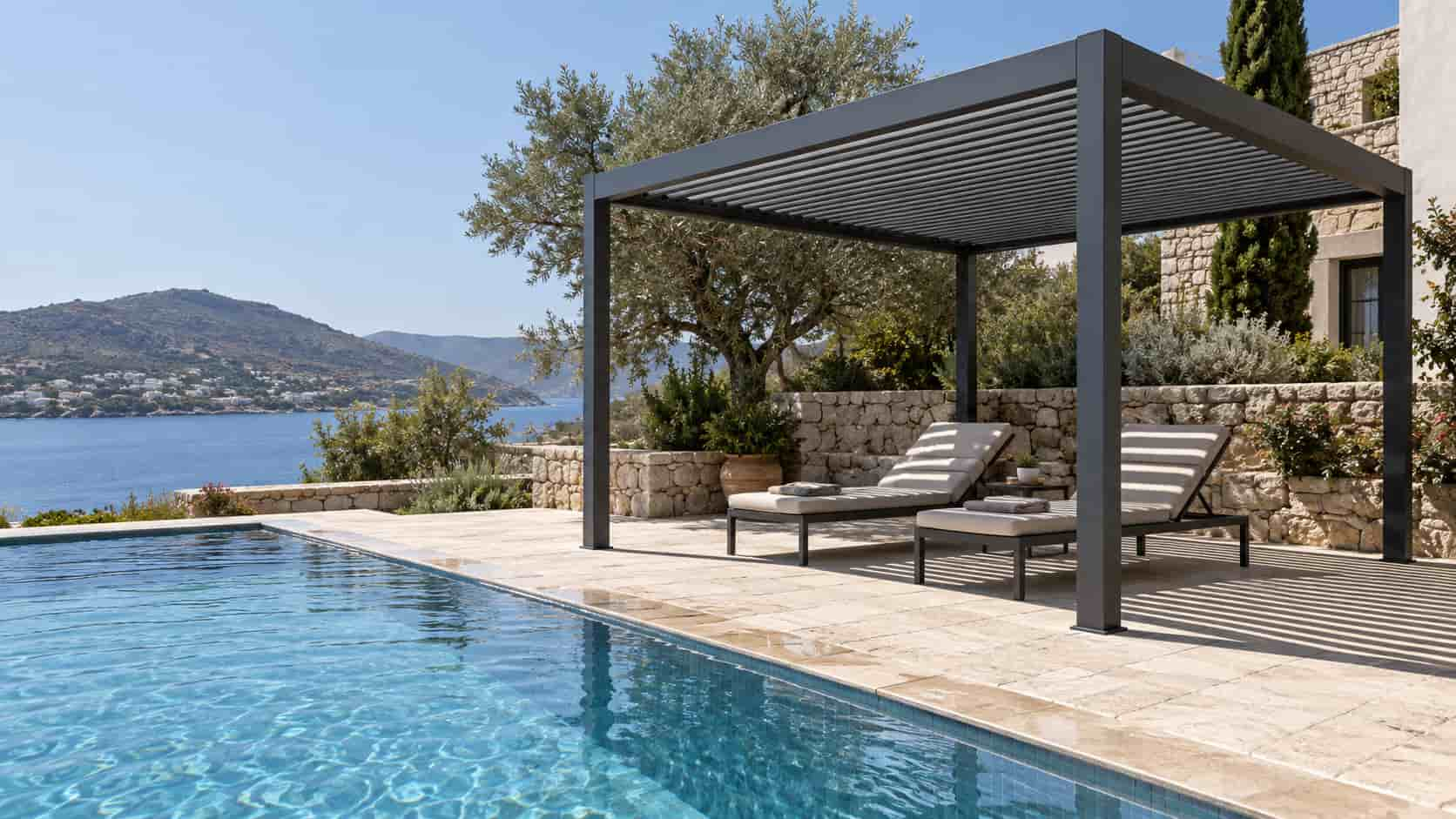
A pergola can be considered when planning a regularly used dining space, relaxation corner or entertaining area beside the pool. Support posts help define the boundaries of this space. Where a structure independent of the building is preferred, models designed for freestanding installation can be selected. Roof movement, post positions and drainage should be planned alongside the furniture layout to avoid restricting the usable area.
How Should You Determine the Shaded Area and System Dimensions Beside the Pool?
Start by measuring the space that needs shade, rather than the entire pool area. Consider sun loungers in their fully reclined position, the room needed to pull chairs away from a table and the routes people will use to move around. For example, a covering with a horizontal footprint measuring three metres by four metres has a plan area of twelve square metres. However, this does not mean it will provide the same amount of usable shade throughout the day.
The position of the shade changes with the sun’s angle, the height of the system and the slope of the covering. When taking measurements, assess sunlight exposure during the hours when the area is used most. Viewing the furniture in its intended position helps determine the required projection more accurately. The space occupied by support posts and the movement of the fabric or panels should also be considered when assessing the net usable area.
How Should Sun Direction and Wind Affect Your Choice of Poolside Awning or Pergola?
The direction of the sun is one of the main factors determining which way the covering should extend. Shade that seems sufficient at midday may move beyond the seating area as the sun gets lower. In parts of the pool area used during the afternoon, check whether overhead coverage alone will meet your needs. Nearby buildings, trees and seasonal changes should also be included in the shade plan to create a layout suited to the intended hours of use.
For wind exposure, assess the product’s operating conditions in both open and closed positions, its span and the installation method together. A single wind resistance rating should not be assumed to apply to every awning or pergola. On compatible motorised awnings, a wind sensor can automatically retract the covering under specified conditions. However, this feature does not override the product’s operating limits; the instructions for the selected model remain essential. Somfy wind sensor information.
Which Materials Should You Choose for Exposure to Moisture and Chlorinated Water?
When selecting materials for a poolside installation, knowing whether the frame is aluminium or steel is not enough. The quality of the surface coating, the suitability of the fasteners and details that prevent water from collecting at joints should also be examined. Coated aluminium designed for outdoor use can be considered, but its suitability for the expected contact with pool water should be confirmed with the manufacturer. The material name alone does not establish that it requires no maintenance or is unaffected by corrosion.
For systems with fabric coverings, request information on colourfastness, sunlight transmission, cleaning methods and water resistance. If rain protection is required, assess the seams, joints, slope and drainage arrangement as well as the fabric. Consult the manufacturer’s maintenance instructions for the appropriate cleaning method after exposure to splashes of chlorinated water. Surfaces that are easy to clean and joints that remain accessible for maintenance should be among the selection criteria for long-term use.
Should You Choose an Opening Roof or a Fixed Cover for Poolside Use?
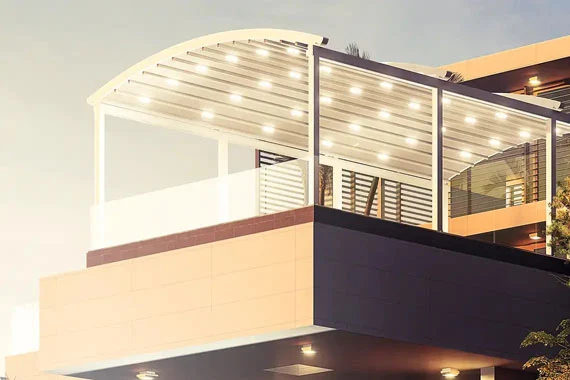
Movable coverings offer flexibility for those who want to alternate between sunbathing and relaxing in the shade. However, retracting a fabric roof does not create the same opening as simply adjusting the angle of roof panels. Tenteks’ bioclimatic pergola systems have different operating mechanisms depending on the model. When selecting a product, check which parts of the roof open, how sunlight is directed and which position provides the desired ventilation.
A fixed cover can be considered where permanent overhead coverage is wanted, although the amount of shade depends on the chosen material’s light transmission. A transparent roof alone may not meet a need for substantial shade. With either option, consider where rainwater will drain, access for cleaning and the covering’s maintenance requirements. The decision should reflect the desired light levels and use of the poolside space, as well as whether the mechanism moves.
How Should Awning and Pergola Placement Be Planned Around Poolside Activities?
Begin the layout by identifying pool entry and exit points, the space around steps or ladders and walkways that need to remain clear. Support posts should not make it difficult to pass sun loungers or move chairs. Views of the pool from the seating area should also be preserved. Choose a position that meets the shading requirement while allowing comfortable circulation, rather than placing the structure as close to the water as possible. The appropriate distance depends on the available space and how intensively it is used.
Before installation, check the supporting structure beneath the ground surface, any services below the paving or decking, and details affecting the pool’s waterproofing. The fixing method should not be chosen based only on the visible surface finish. Roof drainage should not discharge indiscriminately onto walkways or beside sun loungers. If a motorised system is planned, arrange the power supply and access to controls from the start so that cables are not left exposed across circulation routes. This brings installation requirements and everyday use into the same plan.
Which Criteria Should You Use to Compare Poolside Awning and Pergola Quotations?
Compare quotations based on the same dimensions, covering type, supporting structure and included equipment. Frame specifications, the fabric or panel model, motor, sensors, drainage and installation work should be listed separately. It should also be clear whether delivery, ground preparation and electrical connection are included in the price. Comparing only the total cost of two quotations with different scopes can lead to essential features being overlooked.
When choosing a poolside pergola, also consider warranty coverage, maintenance conditions, access to servicing and the availability of replacement parts. Before work begins, obtain a dimensioned layout drawing, a description of the materials and written confirmation of what will be supplied and installed. Prioritise a solution that meets the intended use and has clearly defined technical specifications. This allows maintenance and potential replacement needs to be assessed alongside the initial cost.